Teej Festival in Nepal: Culture, Traditions and Travel Guide
Teej Festival in Nepal, also known as Haritalika Teej, is one of the most colorful and important festivals celebrated by Hindu women in Nepal. The festival brings together faith, family, music, traditional clothing, dancing and cultural traditions.
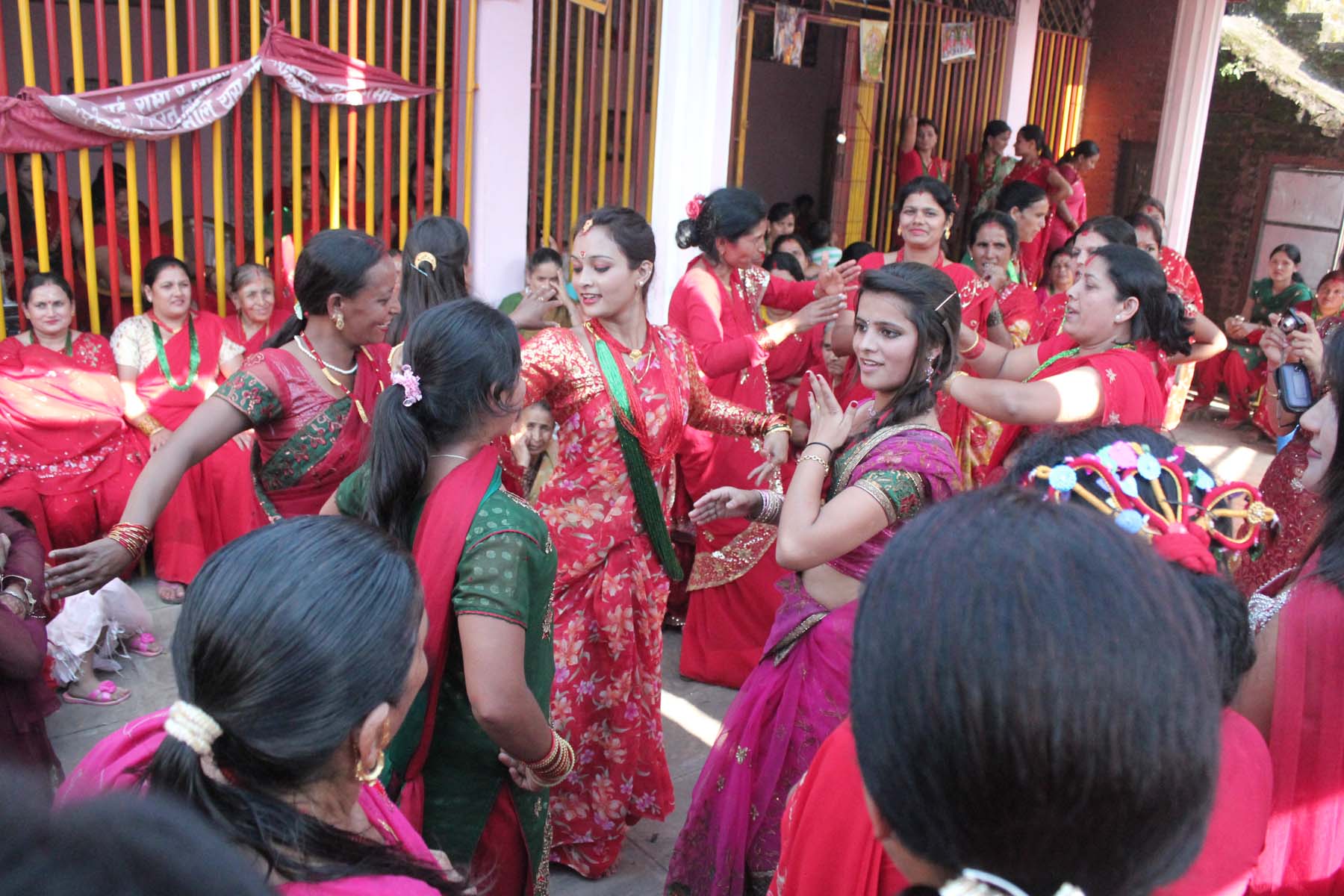
Celebrated over three days, Teej creates a unique cultural atmosphere across Nepal. Women dress in beautiful red sarees, wear traditional jewelry and bangles, sing traditional songs and dance together. For travelers visiting Nepal, Teej offers a fascinating opportunity to experience an important part of Nepali culture.
What Is Teej Festival?
Teej is a three-day Hindu festival traditionally observed by women in Nepal. The festival is associated with Goddess Parvati and Lord Shiva and is an important occasion for prayer, fasting, family gatherings and cultural celebration.
Women across Nepal gather to sing and dance to traditional folk songs. Red clothing, green and red bangles, tika and traditional jewelry are especially visible during the celebrations.
According to the Nepal Tourism Board, Teej is particularly significant for married women, who may visit their maternal homes and enjoy a special feast before beginning the fasting period. :contentReference[oaicite:1]{index=1}
Why Is Teej Important in Nepal?
Teej has religious, cultural and social importance. Traditionally, women pray to Lord Shiva for the well-being, prosperity and longevity of their husbands and family. The festival also provides an opportunity for women to come together, share their experiences and celebrate sisterhood.
In modern Nepal, Teej is also widely seen as a celebration of women’s friendship, family relationships, culture and community.
The Three Days of Teej
Day 1: Dar Khane Din
The first day is commonly associated with Dar, a special feast. Women gather with family and friends to enjoy traditional food before the fasting period begins.
Family gatherings, singing, dancing and traditional celebrations make this day particularly lively.
Day 2: Haritalika Teej
The second day is the main day of Teej. Many women observe a fast and visit temples to offer prayers. Some devotees observe a strict fast without food or water.
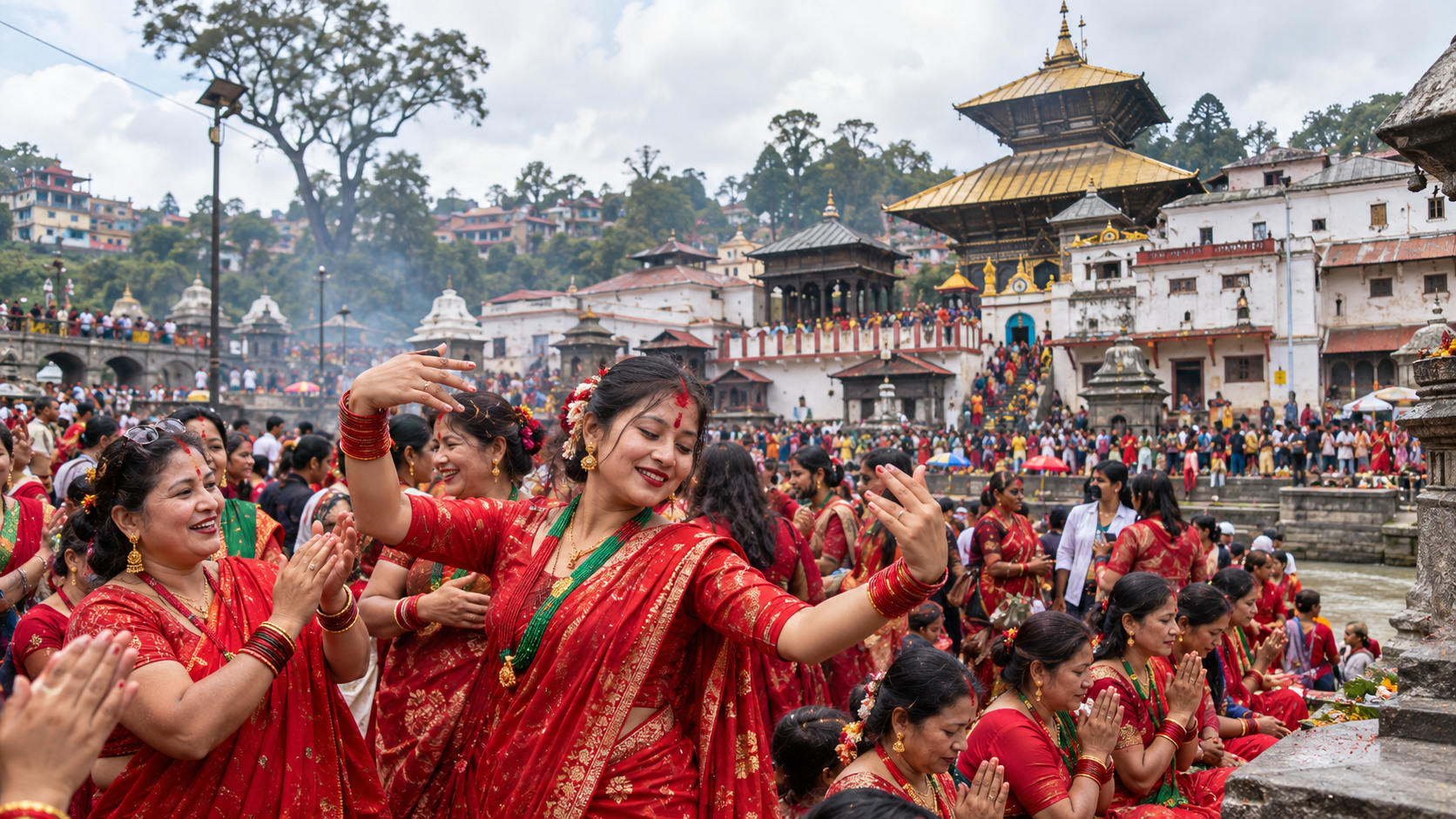
Women dressed in beautiful red sarees can be seen singing and dancing together, creating one of the most recognizable cultural scenes of Teej in Nepal.
Day 3: Rishi Panchami
The final day is known as Rishi Panchami. Traditionally, women perform religious rituals and make offerings to the seven sages, known as the Saptarishi.
The day is associated with purification and religious observances and completes the traditional three-day festival.
Teej at Pashupatinath Temple
Pashupatinath Temple in Kathmandu is one of the most important places associated with Teej celebrations in Nepal. Thousands of women traditionally gather around the temple during the festival to pray and celebrate. The Nepal Tourism Board describes Teej as one of the occasions when large numbers of devotees visit Pashupatinath. :contentReference[oaicite:2]{index=2}
The sight of women dressed in red, singing, dancing and visiting the sacred temple creates a memorable cultural experience.
Pashupatinath is one of Nepal’s most important Hindu pilgrimage sites and is located on the banks of the sacred Bagmati River.

What Do Women Wear During Teej?
Red is the most recognizable color of Teej. Women commonly wear red sarees, kurtas or other traditional clothing. Green and red bangles, necklaces, tika and traditional jewelry complete the festive appearance.
The colorful clothing and traditional jewelry make Teej one of the most visually striking festivals in Nepal.
Teej Music and Dance
Music and dance are an important part of Teej. Women gather in groups and sing traditional and contemporary Teej songs. The songs often express emotions, relationships, family life and women’s experiences.
Dancing together creates a strong feeling of friendship and community and is one of the most enjoyable parts of the festival.

Can Tourists Experience Teej in Nepal?
Yes. Travelers visiting Nepal during Teej can experience the festival as part of their cultural journey. Kathmandu is particularly interesting because major religious sites and public spaces become active with festival celebrations.
Visitors should remember that Teej is a religious and cultural festival. Travelers should respect local traditions, ask permission before photographing people and follow the rules of temples and religious sites.
At Pashupatinath, visitors should be especially careful about photography because the Nepal Tourism Board notes that photography is prohibited inside the main temple complex. :contentReference[oaicite:3]{index=3}
Best Places to Experience Teej in Nepal
- Pashupatinath Temple, Kathmandu – One of the major centers of Teej celebrations.
- Kathmandu Valley – Experience traditional music, dance and cultural activities.
- Patan – Explore historic temples and traditional Newar culture during the festival season.
- Local communities – Experience Teej through family gatherings and community celebrations.
Teej and Nepal Tourism
Nepal’s festivals are an important part of the country’s cultural tourism. Teej provides visitors with an opportunity to experience Nepal beyond its mountains and trekking trails.
From the temples of Kathmandu Valley to traditional music and colorful clothing, Teej offers travelers a closer look at the living culture of Nepal.
If you are planning a trip to Nepal, combining a cultural experience in Kathmandu with a trekking or sightseeing journey can make your Nepal holiday even more memorable.
When Is Teej Celebrated in Nepal ?
Teej follows the Hindu lunar calendar and usually falls around August or September. The exact date changes each year. The Nepal Tourism Board lists Haritalika Teej among Nepal’s annual festivals and events. :contentReference[oaicite:4]{index=4}
Frequently Asked Questions About Teej
What is Teej Festival in Nepal?
Teej is a three-day Hindu festival mainly celebrated by women in Nepal. It is known for fasting, prayers, traditional clothing, music and dancing.
Why do women celebrate Teej ?
Traditionally, women pray for the well-being, prosperity and longevity of their husbands and family. Teej is also an important celebration of women’s friendship, family and cultural traditions.
Where is Teej celebrated in Nepal ?
Teej is celebrated throughout Nepal. Pashupatinath Temple in Kathmandu is one of the most prominent places for Teej celebrations.
Can tourists attend Teej celebrations ?
Visitors can experience Teej celebrations, but they should respect local religious customs and ask permission before photographing people.
What color is traditionally associated with Teej?
Red is strongly associated with Teej. Women commonly wear red sarees or other traditional clothing along with jewelry and colorful bangles.
Experience Nepal During Teej
Teej Festival in Nepal is much more than a religious celebration. It is a colorful expression of faith, family, friendship, music and Nepali culture. The traditional red clothing, temple visits, fasting, singing and dancing create a unique cultural experience for both local communities and respectful visitors.
If you want to discover Nepal’s culture as well as its Himalayan landscapes, Teej is one of the festivals that can make your journey especially memorable.
Explore Nepal with Multi Treks
Discover Nepal’s mountains, culture, festivals and unforgettable travel experiences with Multi Treks.
Photo Credits and Free Images
The photos used in this article are available through Wikimedia Commons under Creative Commons licenses. Keep the photographer’s name and license information when reusing the images.
- Teej.jpg – Ganesh Paudel – CC BY-SA 3.0. :contentReference[oaicite:5]{index=5}
- Celebrating Teej Festival in Nepal 2010 – CC BY-SA 2.0. :contentReference[oaicite:6]{index=6}
- Teej Festival.JPG – Drpaudel – CC BY-SA 3.0. :contentReference[oaicite:7]{index=7}
- Teej Dance and Music – Creative Commons. :contentReference[oaicite:8]{index=8}