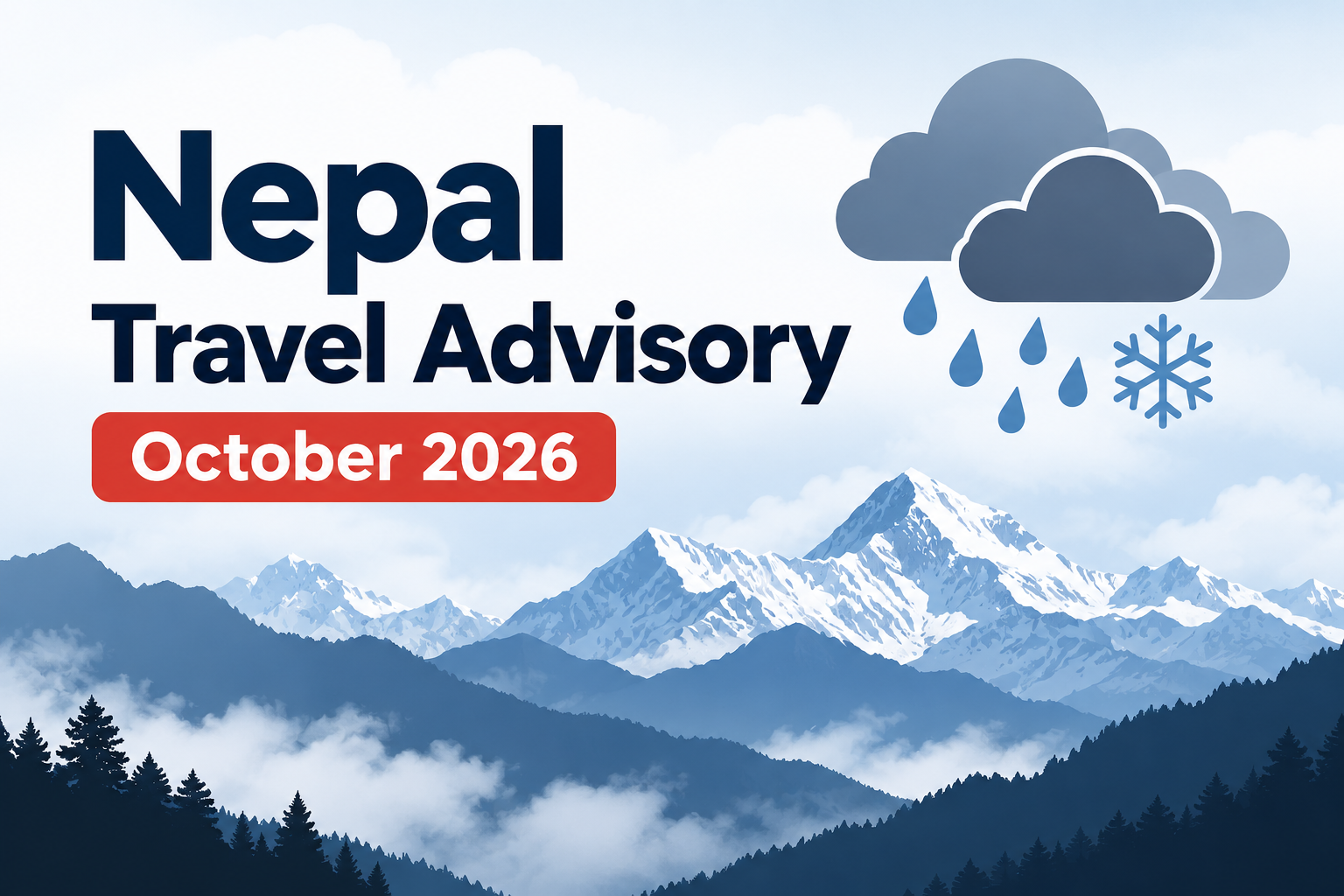
Nepal has issued a travel advisory urging domestic and international visitors
to exercise caution as the effects of Cyclone Arnab are expected to bring
adverse weather conditions across the country from October 29 to 31, 2026.
According to the Nepal Tourism Board and the Department of Hydrology and
Meteorology, several provinces may experience moderate to heavy rainfall,
thunderstorms, strong winds and snowfall. High-altitude and Himalayan
regions face additional risks, including snowstorms and avalanches.
Travelers planning trekking, hiking, mountain expeditions or road journeys
in Nepal should carefully review weather forecasts and follow official
safety advice before departing.
Which Areas of Nepal May Be Affected?
Koshi, Madhesh, Bagmati, Gandaki and Lumbini provinces are expected to
experience rainfall, with heavy precipitation possible in some locations.
Parts of Karnali and Sudurpashchim may also experience rain and snowfall.
In the Himalayan and high-hill regions, heavy snowfall, snowstorms and
avalanches could create challenging conditions for trekkers, climbers
and local communities.
Rainfall may also increase the risk of landslides, flash floods and rising
river levels. Road travel and domestic flights may experience delays or
disruptions depending on local weather conditions.
Important Advice for Trekkers and Mountaineers
Autumn is one of Nepal’s most popular trekking seasons. However, adverse
weather can quickly change conditions on mountain trails, particularly
at high elevations.
- Check official weather forecasts:
Review the latest updates from Nepal’s Department of Hydrology and
Meteorology before leaving. - Reconsider high-altitude travel:
Postpone treks and expeditions in affected areas if authorities advise
against travel. - Stay in a safe location:
If you are already trekking in an affected area, follow your guide’s
instructions and remain in a safe place until conditions improve. - Avoid risky routes:
Stay away from landslide-prone slopes, unstable mountain trails,
riverbanks and flood-prone areas. - Allow flexibility in your itinerary:
Keep additional time for possible flight cancellations, road closures
and changes to trekking plans. - Follow local guidance:
Listen to your trekking guide, local authorities and emergency response
teams.
Never continue towards a mountain pass or exposed trail simply to maintain
your planned itinerary when weather conditions become dangerous.
Will the Weather Affect Flights and Road Transportation?
Heavy rain, snowfall and strong winds may affect transportation in
different parts of Nepal. Mountain roads can become difficult to navigate
because of landslides, while poor visibility and adverse weather may
disrupt flights to mountain destinations.
Travelers flying to Lukla or other mountain airports should remain in
contact with their airline or trekking agency for the latest updates.
If you have a scheduled trek, keep your accommodation, transport
arrangements and return travel plans flexible wherever possible.
Emergency Contact Numbers in Nepal
Keep these important numbers available during your stay in Nepal:
- Weather information: 1155
- Disaster assistance: 1234
- Nepal Police: 100
- Armed Police Force: 1114
- Tourist Police: 1144
For the latest weather forecasts and official warnings, visit:
How Multi Treks Can Help You Travel Safely
At Multi Treks, traveler safety should always come before the itinerary.
Weather conditions in the Himalayas can change rapidly, so trekking plans
should be reviewed according to official forecasts and local conditions.
Before starting your journey, communicate with your trekking agency and
guide about route conditions, transportation updates and possible
itinerary changes. If an area is considered unsafe, postponing or adjusting
your trip is the responsible choice.
Our aim is to help travelers explore Nepal’s mountains responsibly while
prioritizing their safety and well-being.
Final Thoughts
The weather advisory for October 29–31, 2026, is an important reminder
that mountain travel requires preparation and flexibility. Heavy rainfall,
snowfall, landslides and avalanches can create serious risks in affected
regions.
Before travelling, check official updates, follow local safety instructions
and avoid unnecessary journeys during dangerous weather conditions.
Weather conditions and official advisories may change. Always check
the latest information before departure.